From experience to understanding.
Designing engineering learning for transfer and adaptive expertise
When does technology help students move from experience to understanding—and from understanding to transfer—while keeping reasoning and judgment with the learner?
For more than a decade, I have pursued this question through open tools, public science, visual representation, collaborative design, manufacturing projects, immersive laboratories, and generative AI. The technologies changed; the educational problem became more precise.
This page traces how those questions evolved—from my early open tools and public explanation to evaluated immersive environments and GenAI. It includes our past studies, mixed findings, exploratory projects, and ideas.
A learning-science lens
I use four interdependent perspectives to examine learning environments. They function as design questions.
I use these lenses retrospectively to interpret work developed across different periods.
Generative AI without intellectual substitution
The question is not whether students can produce more with GenAI. It is whether they reason more deliberately, monitor their understanding, and remain responsible for judgment.
With Kadir Kozan and colleagues, I coauthored a case study of the initial integration of generative AI into an introductory undergraduate engineering course. The study followed one instructor, seven teaching assistants, and student performance on formative exercises during the semester.
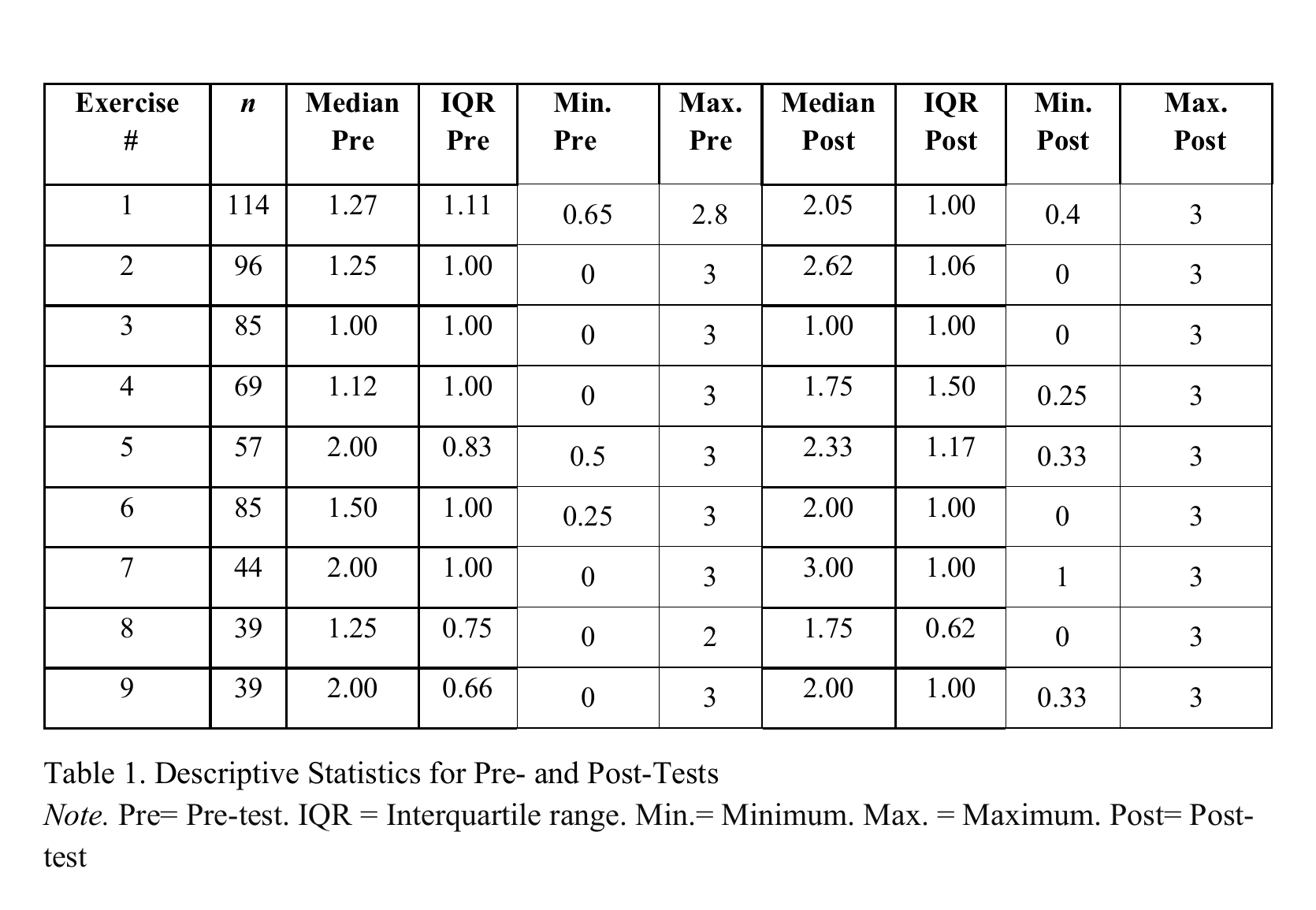
Mean performance increased across all nine exercises, with statistically significant pre/post increases reported for eight in Table 2. Student use declined over the semester, and much of the integration remained at the level of replacing existing methods or making coding tasks more efficient.
Mean gain across nine formative exercises
Bars begin at zero and show the mean post-test minus pre-test gain reported in Table 2. Gains were positive for all nine exercises, ranging from 0.18 to 0.86. Sample sizes appear at right.
View the original study table
Designing immersive environments for understanding
Immersion can create activity without conceptual change. The target concept, learner action, representation, feedback, and assessment must align.
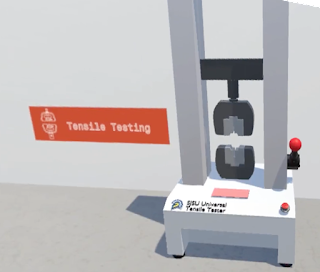
Can a materials laboratory be placed in VR?
“I believe VR will provide most of the learning environments in the future.” The original claim remains visible so the later evidence can be read against it.
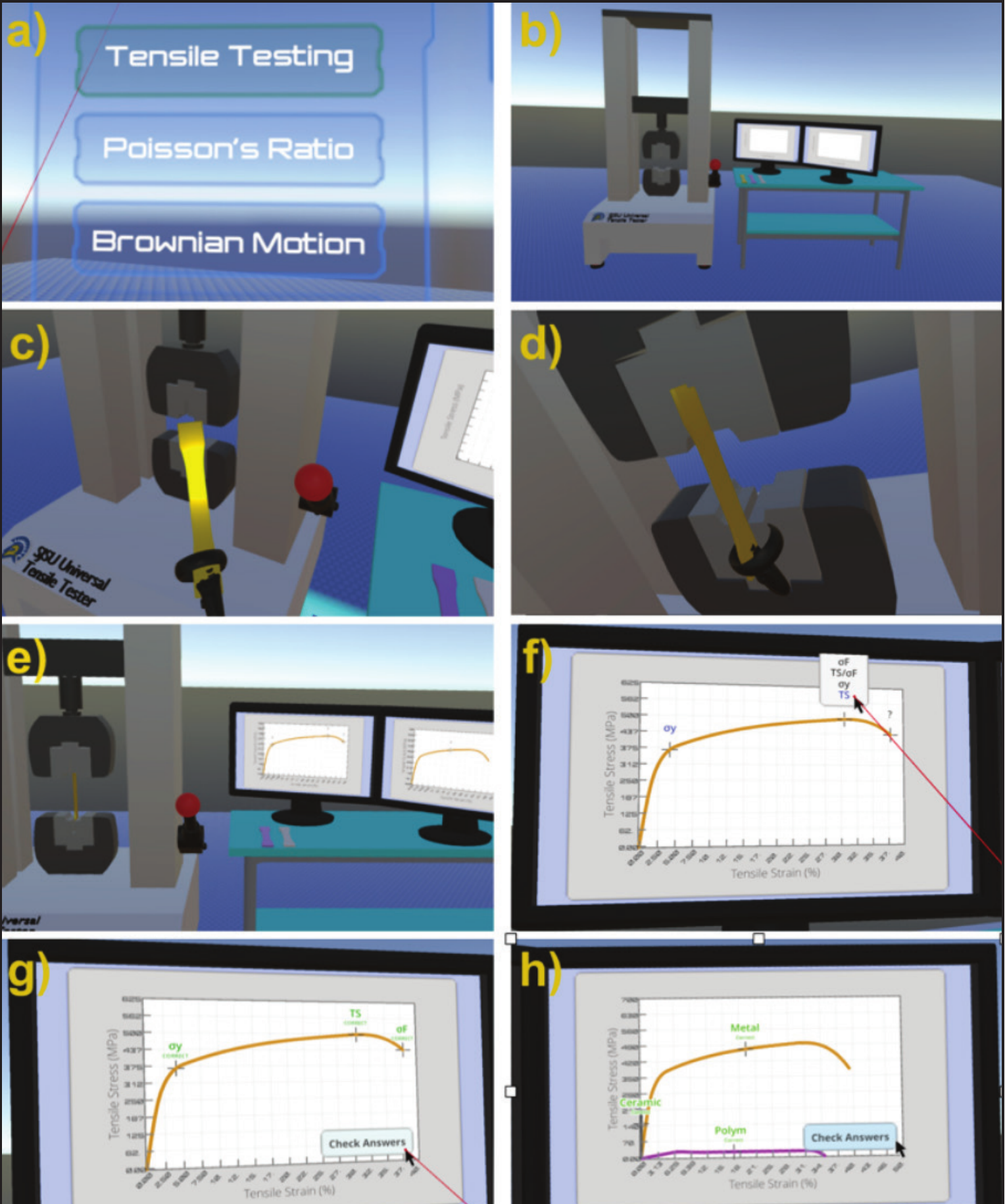
What improved—and what did not?
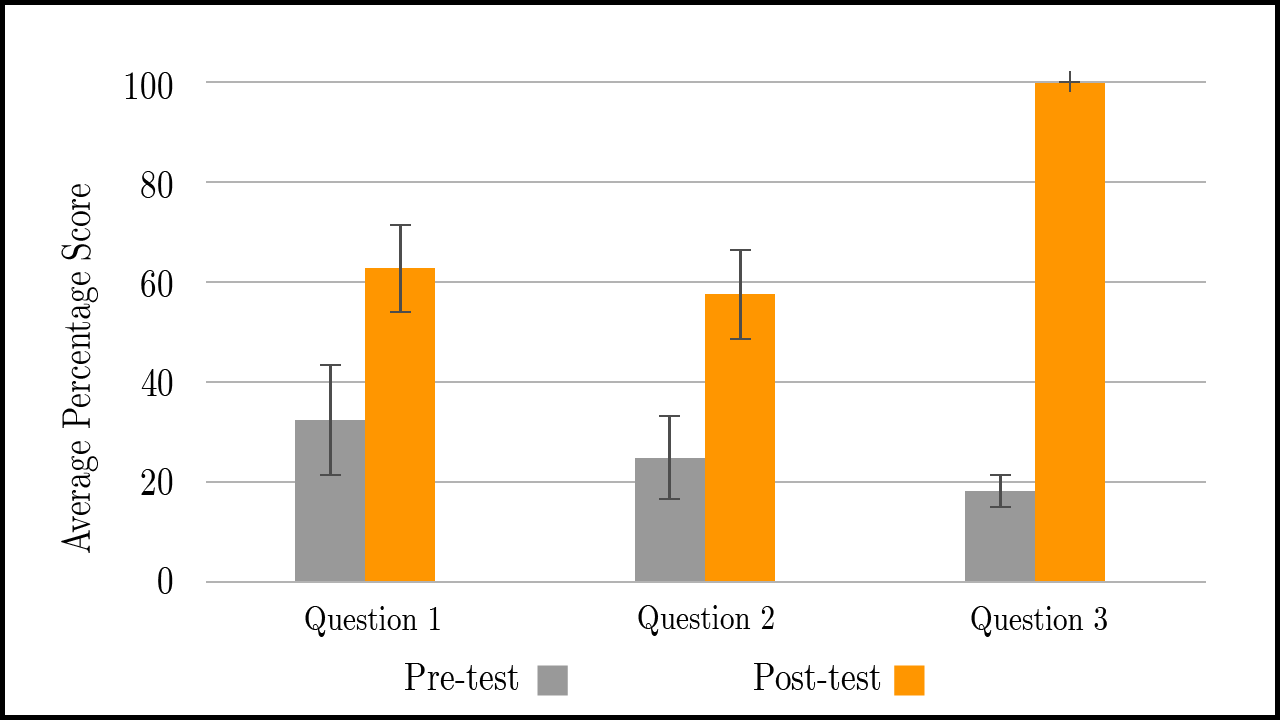
Tensile-testing concepts improved; the Poisson’s-ratio module did not outperform the traditional lecture.
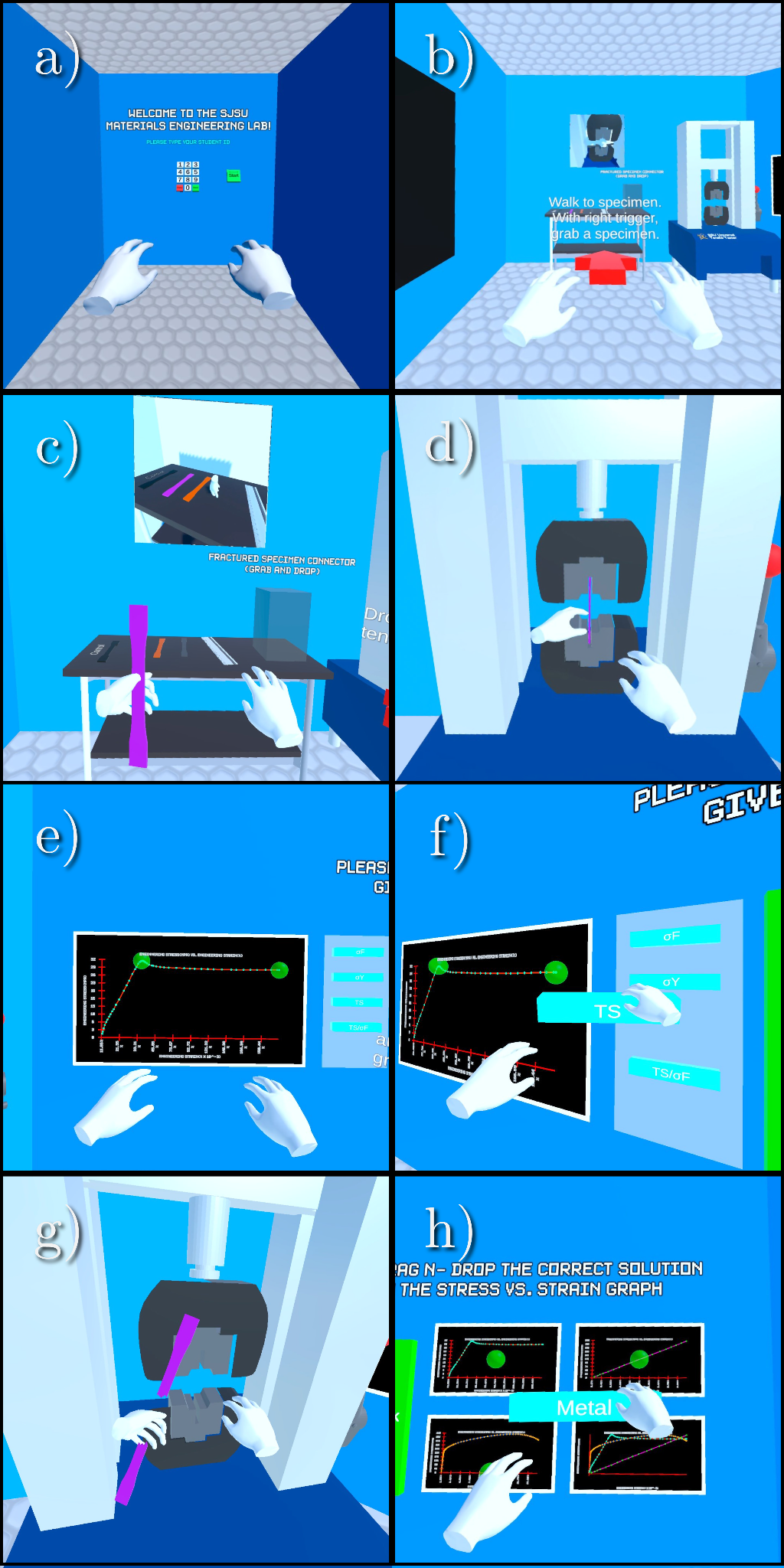
How should action and representation align?
Direct action, stress–strain representation, feedback, questioning, and assessment were designed as one revisable system.
2017 · The original ambition
“I believe VR will provide most of the learning environments in the future.”
The first public prototype asked whether a student could manipulate engineering objects, conduct a tensile test, and interpret the response inside an immersive environment. The post documents the original ambition and starting point; it does not by itself establish a learning effect.
2023 · What immersion did—and did not—improve
In the published classroom study, students performed virtual tensile tests, manipulated full-scale specimens, and explored mechanical properties and Poisson’s ratio using hand controllers. Measured assessment performance improved for the tensile-testing concepts, while the Poisson’s-ratio module did not show improvement beyond the traditional lecture. That mixed result rejected the easy story that immersion is inherently educational and made alignment among concept, action, representation, feedback, and assessment the central design problem.
2025 · From presence to purposeful action
The redesign with Rafael Padilla Perez drew on the Cognitive Affective Model of Immersive Learning (CAMIL) and research on embodied learning. CAMIL treats presence and agency as psychological affordances of immersive technology, not as learning outcomes. Their educational value depends on instructional methods and on how they affect interest, intrinsic motivation, self-efficacy, embodiment, cognitive load, and self-regulation. Embodied-learning research adds a sharper requirement—the learner’s physical action should be congruent with the concept being learned.
Positioning the specimen and operating the machine reproduce important elements of the tensile-testing procedure. Conceptual learning depends on coordinating those actions with the evolving stress–strain representation, property identification, feedback, and in-environment questions that require explicit interpretation.
CAMIL proposes conditional relationships among these factors; the 2025 exploratory study did not measure each pathway separately.
Learning through participation, tools, and partnerships
Knowledge is not developed only inside a course. Facilities, clubs, design projects, public workshops, and sustained access to practitioners create communities in which students can contribute, receive feedback, and grow into more expert forms of participation.
Open tools and creative engineering
The award’s education plan formalized three objectives: create open-source virtual-reality engineering tools, cultivate creative engineers through collaborative design, and conduct outreach with schools serving underrepresented communities in Silicon Valley. These are award objectives; the page does not treat every proposed activity as a completed outcome.
Cultural heritage, sustainable art, and 3D printing
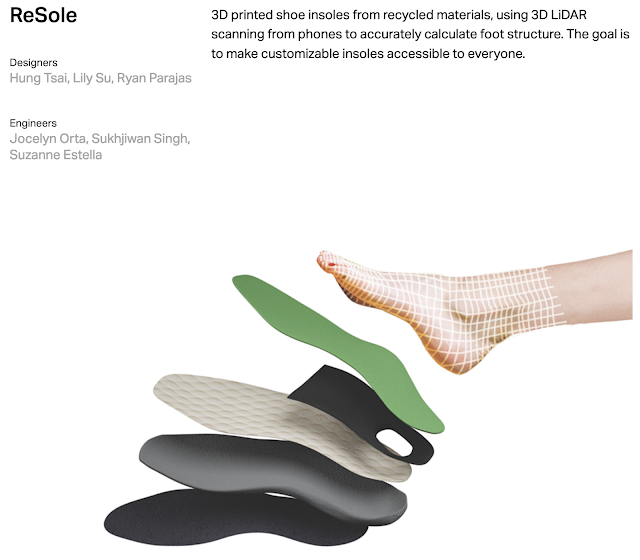
As co-PI with PI Yoon Chung-Han, I worked on the $20,000 project “Exploring and Supporting San José’s Cultural Heritage and Sustainable Art through 3D Printing Technology.” It connected cultural heritage and sustainable design with additive manufacturing and recycled materials.
A self-learning manufacturing ecosystem
The Kordestani-supported program proposed a collective learning network spanning students, companies, the public, and environmental questions. Its emphasis was not only equipment access, but the circulation of knowledge through workshops, tours, mentoring, and shared projects.
Workshops, mentoring, and infrastructure
Metal additive-manufacturing infrastructure, free 3D-printing workshops, company tours, career panels, and industry mentoring extended learning beyond one course. These activities complemented formal teaching rather than replacing it.
Making student thinking visible in public
Explanation is not a decorative final step. It reveals how students organize knowledge, select evidence, and anticipate misunderstanding.
In 2017, several projects moved student work beyond the instructor–student exchange. Students explained materials to public readers, engineering activities entered local schools, and the first virtual laboratory became a public project.
Materials websites created by students
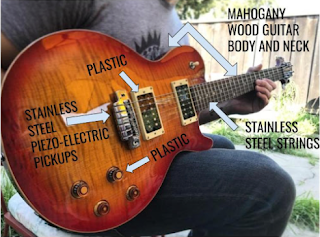
In Spring 2017, MatE 25 students created public websites that identified materials in everyday objects and assembled their own “top ten” materials with photographs and explanations. The assignment asked students not only to find examples, but to make their reasoning legible to someone outside the course.

Outreach and evidence-based classroom questions
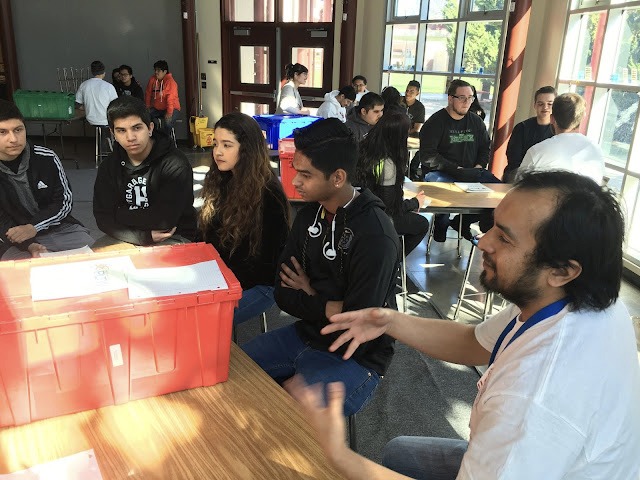
High-school additive-manufacturing activities connected sustainability, design, and making. In the same period, the study “Can Students Flourish in Engineering Classrooms?” examined student-centered and teacher-centered approaches in large introductory mechanics courses and reported statistically significant differences between the compared classes. Together, these activities reflect an effort to treat participation, explanation, and measured performance as related—but distinct—questions.
The public origin of the virtual laboratory
The May 2017 VR post asked whether a student could manipulate engineering objects, conduct a tensile test, and interpret the response inside an immersive environment. That public prototype became the starting point for the later evaluated and redesigned systems above.
“I believe VR will provide most of the learning environments in the future.”
View the outreach post
Read “Can Students Flourish?”
View the first VR post
Learning to notice meaningful structure
A useful representation does more than attract attention. It helps a learner notice the relationships that matter for reasoning.
Before immersive laboratories, I was already using representation and designed objects to ask how students might see distributions, fracture, structure, and manufacturing differently.
Statistical point clouds and the JOM cover
“My question is: Can you teach statistics in a better way?”
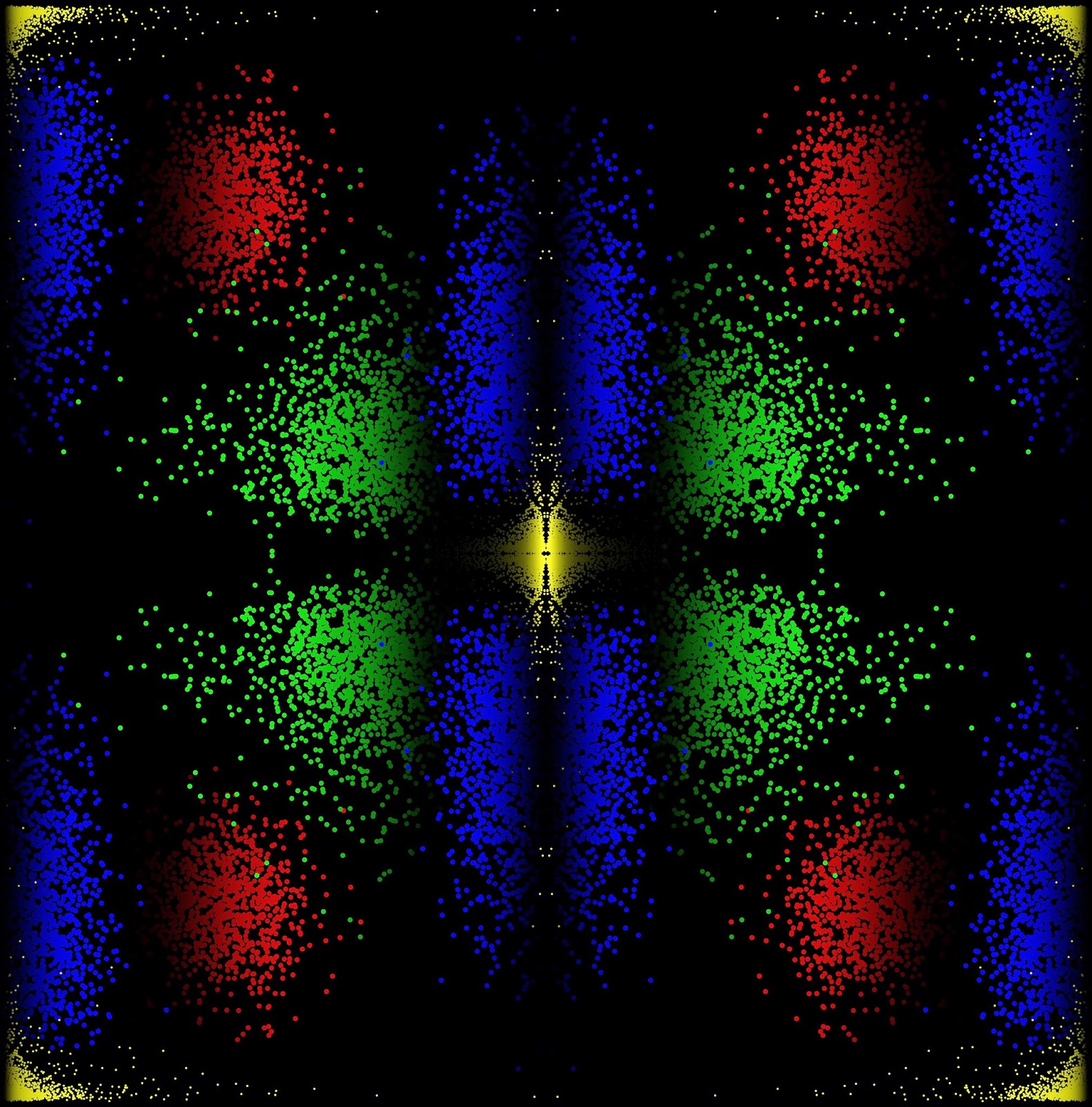
In 2014, I used Mathematica to render Gaussian, Gumbel, Fréchet, and Weibull distributions as three-dimensional point clouds. The work began as a way to teach statistics visually and later crossed into scientific imagery and the February 2015 cover of JOM. It was an early example of the same idea that appears later in VR: a representation is useful when it changes what a learner can inspect and question.
Design for Innovation at Illinois Tech
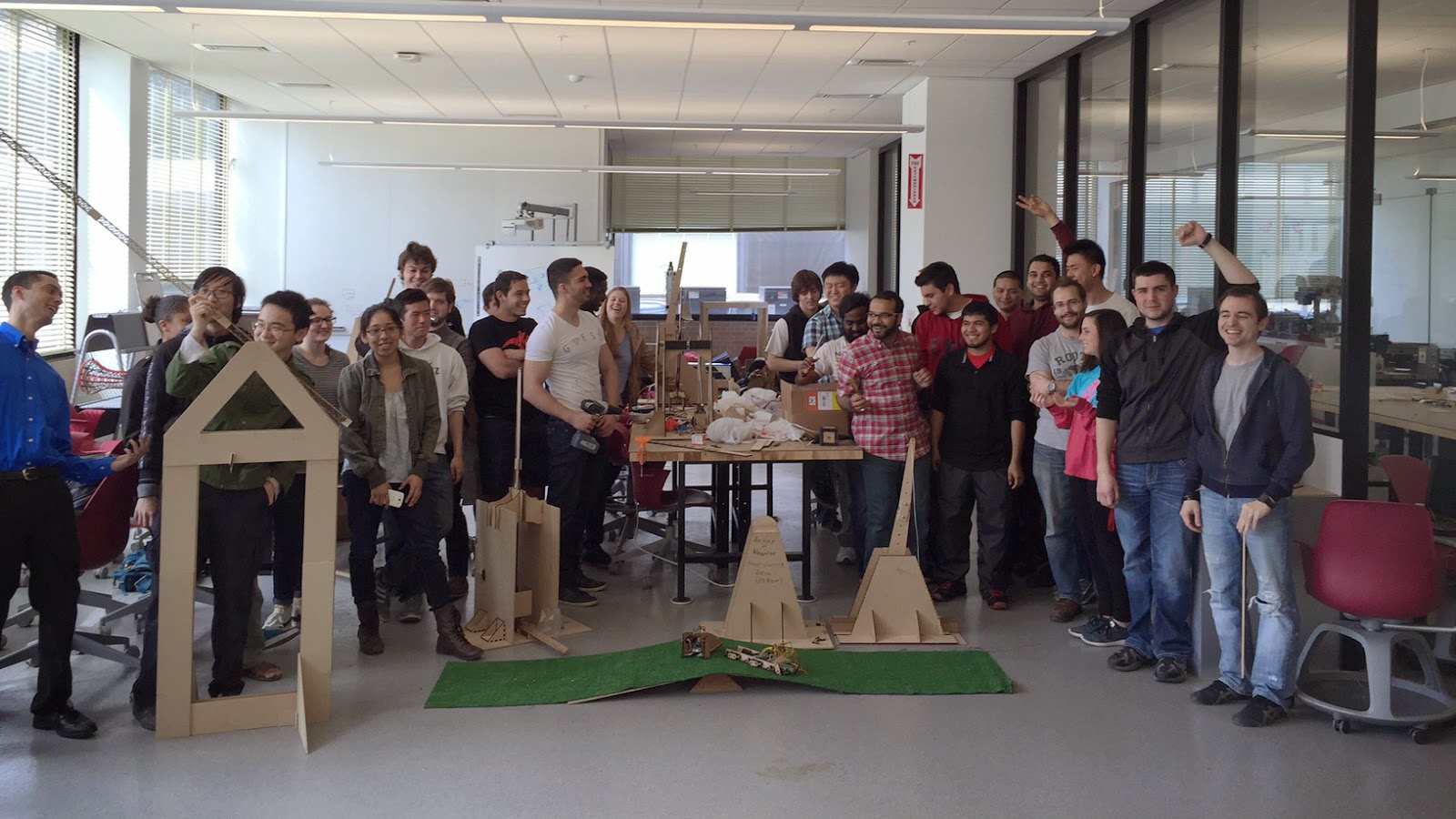
In MMAE 232, collaborative projects included a sustainable chair, a trebuchet, and a biomimetic inchworm robot. These projects made analysis, fabrication, iteration, and explanation part of the same learning sequence.
Photography, fracture, and multiscale observation
In 2016, I wrote about using my own photography alongside microscopy and engineering images to connect familiar visual structures with fracture, microstructure, and manufactured materials. The purpose was to generate questions before introducing formal terminology.
The comparison moves from a rose and its fracture morphology to the multiscale structure of 3D-printed ABS. It shows a recurring idea in my education work: a familiar image can become a bridge to patterns that are otherwise difficult to notice.
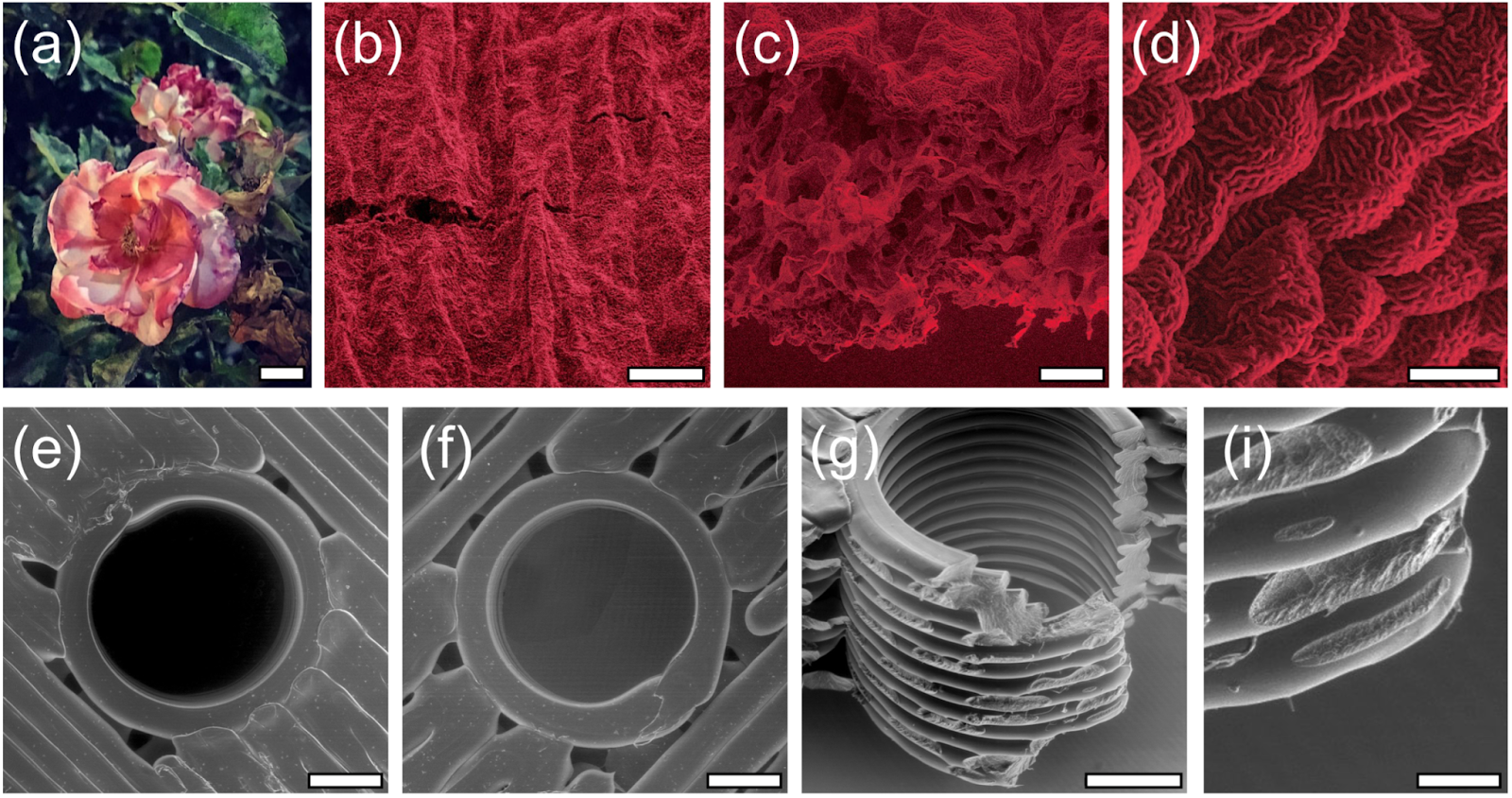
Read the original 2016 writing
On education, 2016:
Can we better facilitate learning in engineering education using arts? The figure given below shows sets of images–all taken by me–that are related to fracture and microstructure. First set of images (a) to (d) includes (a) rose, (b) crack front in a rose petal, (c) fracture surface of the petal, and (d) surface morphology of the petal. The second set of images (e) to (i) shows (e) surface of a 3D printed ABS containing a circular hole, (f) internal microstructure just below the top surface of 3D printed ABS in (e), (g) fracture surface near the hole, and (i) higher magnification image of (g). These two sets of images are both related to fracture phenomenon and microstructure. Based on my experience, showing the first set of images and then showing the second set to explain the fracture in additively manufactured materials results in a higher level discussion on the subject and more questions from the students. I plan to investigate the effects of using arts in engineering education in a more systematic way to quantify the possible benefits in learning.
Figure: Multi-scale arts consisting of a) life size artistic images and high magnification SEM images that shows b) crack bridging, c) fracture surface, and d) intricate surface morphology of a rose petal. Fused deposition modeled ABS e) top surface raster, f) internal raster with thicker roads, g) fracture surface around the hole, and i) fracture surface at the road level. Scale bars represent a)10 mm, b) and c) 50 μm, d) 10 μm, e), f), and g) 1mm, and i) 100 μm.
Open knowledge as an educational method
The earliest public work asked how tools, notes, talks, and mentoring could make expertise easier to inspect, question, and use beyond a single classroom.
“Technology can be used to improve traditional education.”
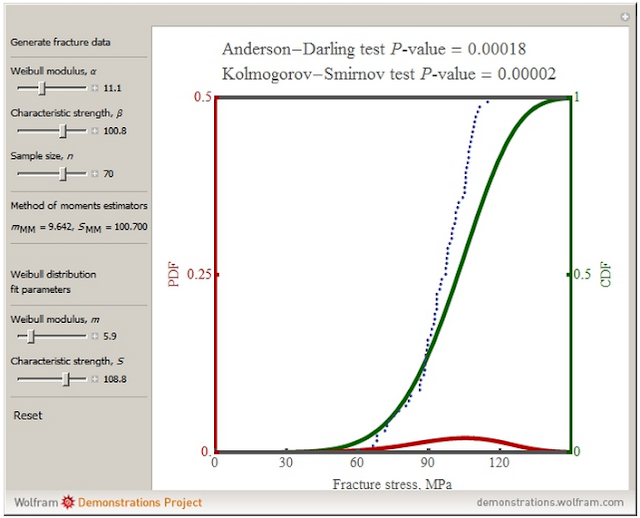
Weibull fracture-data module
A Wolfram self-learning module generated fracture data, fit two-parameter Weibull distributions, and compared goodness-of-fit tests. It turned an abstract statistics lecture into something a learner could vary and inspect.
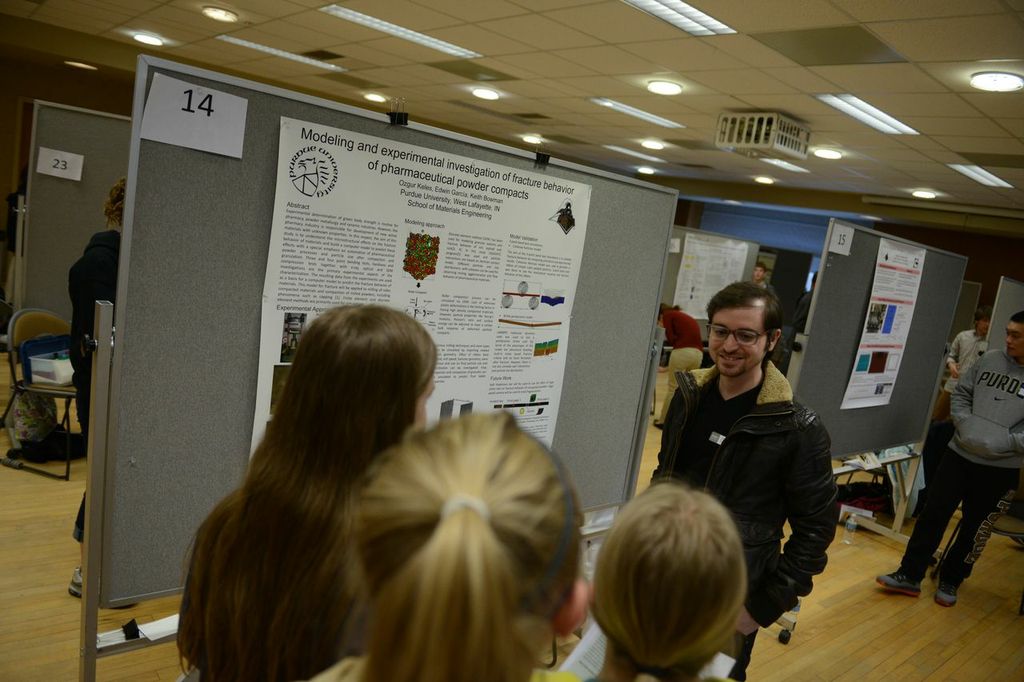
Science talks and scholars fairs
Purdue Science Talks, Science for Everyone, and Next Generation Scholars fairs placed scientific explanation in public and cross-disciplinary settings.
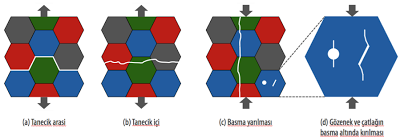
Kopma fracture mechanics
Turkish fracture-mechanics notes and lectures extended formal engineering knowledge beyond a single enrolled class.
Learning Creative Learning and “Mentoring the World”
Reflections on MIT Media Lab’s Learning Creative Learning course and on mentoring asked how expertise, feedback, and networks could become more broadly available.
Interactive learning, public education, and mentoring
“If we could help students to discover their educational passions earlier in life … we could potentially revolutionize the educational system.” The essay explored sensors, personal portfolios, Scratch, and 3D printing as possible routes to individualized learning.
I focus on prior knowledge, multimodal representation, task-aligned interaction, formative feedback, and transfer. I do not assign fixed learning styles or treat attention signals as proof of interest; any learner-data study must earn its place through consent, privacy protection, data minimization, and validated inference.
Read the original public-education essay (public update posted July 2013)
On public education (Thanks to Jessica Mehr for the edits):
The use of technology in public education is still in its infancy, severely limiting hands-on learning opportunities. At the same time, the American education system promotes a generalized curriculum drastically longer than most Western nations; students often do not choose their focus field until their sophomore or junior year of college, and such decisions are often based on practicalities, not genuine passion.
If we could help students to discover their educational passions earlier in life—preferably between the ages of 5-12—and then facilitate the development of these passions via technology, we could potentially revolutionize the educational system.
Technology and education should be integrated in two major ways:
1) To identify student passions/interests at a very young age.
2) To provide a platform for facilitating personal, creative, and intellectual success.
1) Identifying Student Interests
Identifying a child’s educational passions at an early age could allow for a level of focused, thorough study that is relatively unheard of in America’s current educational environment. Through early detection, we could develop a lifelong learning path for our students. But how does one predict the lifelong educational passions of a five-year old? Innovative technologies could potentially identify innate interests that the child is not conscious of or able to communicate.
Dynamic systems could relate students’ physical movements to their interests in particular environments. For example, if students are given the chance to spend an afternoon in a science museum, tracking devices could relate the time spent at different sections to their interests. Thus, a student who spends more time in a botanical garden could be associated with a higher interest in biology. Alternatively, a student who spends more time in the space section might be regarded as being more technology-oriented. Google glass will be a flexible tool to understand how people learn and improve education, especially with the addition of an eye tracking feature.
Likewise, static systems could reveal interests by using electroencephalography (EEG), pressure and movement sensors, and cameras in schools and museums. Obviously, implementing these strategies would require pilot programs in which parents/guardians provide express permission for students to be monitored from a distance. In such an environment, students’ brain activity could be measured via EEG while students are shown pictures on different topics such as arts, literature, mathematics, and science. If a student shows a higher brain activity when viewing the arts, further analysis could be conducted on subtopics such as photography, collage, dance, theatre, and music to help them discover their talents. Unlike the known practice of using EEG once or several times, I am suggesting the use of EEG in regular periods to detect changes in interests and their possible correlation with topics learned or associated activities. The use of EEG could be standardized as equipment such as Emotive becomes cheaper. In addition, electrodermal activity (EDA) can be used to measure skin conductivity through wearable sensors [1]. The change in skin conductivity is related to emotion, cognition, and attention [2]. Hence, a comfortable wrist band sensor [2] can provide a measure for student involvement for specific tasks and activities.
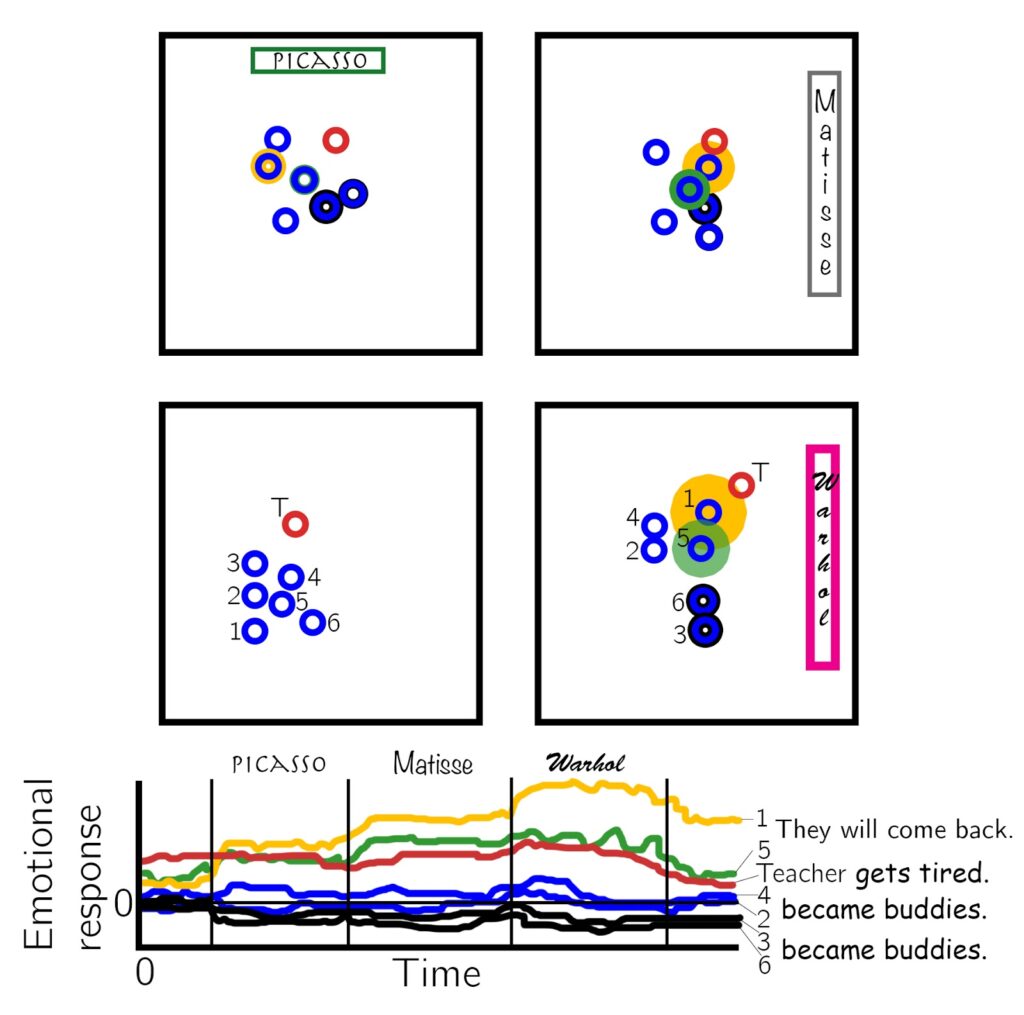
Figure showing an imaginary museum education situation with emotional responses (skin conductivity) of six students (blue circle) and a teacher (red circle). Positions can also be gathered to generate a point cloud for further correlation. Warhol seems to be favored by some of the students.
We could potentially implement pilot “sensor schools” that monitor student behavior through sensors and cameras. By this way, data collected from pressure sensors embedded in chairs and tables could be used to distinguish people that have hard time staying still in the classroom. Different types of learning could also be identified; tactile, visual, and auditory learners could be distinguished early on to provide each child with an optimal learning environment.
Once a student’s innate talents and interests are identified, students can begin to cultivate these skills at a drastically younger age. Rather than forcing students to spend equal time on all subjects, they can be given added challenges in the field that interests them most; by finding his/her passion, students will realize that school does not have to be a collection of onerous tasks, but can be source of great fun and personal reward.
2. To provide a platform for facilitating personal, creative, and intellectual success.
It is well established that hands-on learning is an essential supplement to classroom-based discussion; however, at the elementary-school level, hands-on learning is often added sporadically via activities and field trips, and students are rarely able to integrate these experiences into a long-term learning trajectory.
Technologies, such as Scratch-based web design and 3D printing, could offer young students the ability to take seemingly disparate educational experiences and understand them in the context of a lifelong educational plan.
a. Scratch-based web design
If students began a personal website at an early age, it could serve as a life-long portfolio, one that demonstrates their practical understanding of the information they learned in class. This website would be an open-ended project allowing to students to showcase their accomplishments and self-assess their educational progress. Such a web site might initially consist of a basic biography, interests, hobbies, etc. Students could learn effective collaborative techniques by reviewing each other’s website and providing peer feedback. During such reviews, each website would develop visitor statistics that could be used to teach basic statistics at an early age. In addition, the process of creating and maintaining such a website would improve communication skills, promote creativity, and teach effective design/presentation techniques crucial to any professional or academic field.
An adapted version of the Scratch–a programming language–developed by the Lifelong Kindergarten Group at the MIT Media Lab would be ideal for such an endeavor. Utilizing a tool such as Scratch would allow students to document their hands-on learning accomplishments via a hands-on technological tool. Scratch introduces students to the world of web design at a level that is accessible, encourages creativity, and familiarizes them with basic coding, paving the way for an advanced understanding of coding languages in the future.
b) Scratch-based 3D Printing
In addition to developing a web-based portfolio to which students can add throughout their academic career, 3D printing can be introduced in to public education in order to cultivate student’s creativity and self-expression. I am confident that 3D printing technologies will dominate the future of manufacturing, affecting not just traditional industries such as automotive and household products, but food, fashion, construction, etc. A modified version of Scratch could be used generate 3D shapes and communicate with the 3D printer. Students could use this program to create art pieces, build machine parts, or even design new ways to present meals or chocolates at restaurants. If they have bigger projects to pursue as individuals or groups, they should be encouraged to seek funding for their projects on Kickstarter or similar sources.
Conclusion
If pilot programs utilizing these advanced technologies to identity and cultivate student interests are successful, they could then be applied at the state, national, and even global level. I believe that our inability to solve major world problems (energy, climate, water, food, modern slavery, etc.) is not due to a lack of solutions; it is due to a lack of properly educated and passionate problem solvers. An aggressive and innovate technology-based program provides the best opportunity for nurturing an entire generation of such dedicated intellectuals.
Read the original “Mentoring the world” essay
Mentoring the world
The ultimate degree that makes one`s future look the brightest: PhD. Yes, under a lower unemployment rate, those doing their PhDs always publish papers, sometimes write a book, but rarely become famous, and never… Is there anything you imagine that Ph.D.s never do? Not really. So, they also do regular stuff and have their own fallacies like the rest of the society. Their difference lies in their higher academic achievements, which, I believe, are motivated by their mentors.
Let’s take a look at the life of someone doing PhD. It is a good life, at least for the first three years of PhD. Getting a great education is like winning the powerball. You enroll in a Ph.D. program, start working on important projects, and think of making a difference. However, you also sweat over a single topic for a long time, listening to your advisor, feeling unlucky and constrained by the circumstances. This is the opposite of what many would believe lucky people’s lives look like. Richard Wiseman claims that lucky people are those who maximize their chances, rely on their intuition, think they are indeed lucky, and know how to turn bad luck into good luck. Therefore, my question is whether or not Ph.D.s are unlucky people living a good life. And if our answer is yes they are, I believe it is the educators who impose this life on them due to the educational system.
This brings us to the master-apprentice type of education. Many masters (advisors or professors) take for granted the survivor of the fittest approach in science and, therefore, they neglect their main role of being a mentor. Ken Robinson describes mentoring as recognizing, encouraging, facilitating, and stretching. Accordingly, research should be interest-driven and should not be an imposed fixed topic. Professors should help students develop a vision, aim high, and cultivate the habit of hard work. The educational environment should promote sharing and be more tolerant of possible failures. The governing idea should be that we can extend our capabilities and achieve no matter what. Do you think, however, that this is the current practice? I can almost hear you saying “no.”
Even the most prominent professors do a poor job in mentoring the best students of the world. Most of these successful young people do not even get close to realizing their full potential. They use their talents only partially to make money for living. So, if we cannot educate a handful of top-of-the-cream students, how are we supposed to educate others and help them reach their full potentials? The solution is good mentoring. Your mentor can upgrade you to the class of the lucky by providing helpful guidance and motivation. Human brain is capable of handling much more than we imagine. For this reason, we must seek good mentoring that can transform us into independent, self-motivated, and creative individuals.
Read the original note on interactive self-learning modules
Primarily because of my co-advisor Dr. Keith J. Bowman, I am interested in engineering education, as well. My short-term goal is to introduce interactive self-education modules, which are based on Mathematica’s computable document format(CDF); please check my demonstration-Weibull distribution fit to computer generated fracture data. In the long run, I will integrate these interactive documents into traditional classroom teaching by using either touch tables (a use is given in the talk by Bang Wong) or students’ touch pads; Eric Schulz talks about his teaching experience in here. I am currently working on a fracture module that will be a part of the Material Science Academy project started by Dr. Arda Çetin. An example application in Turkish showing the elastic shape change can be seen here.
2010–25Teaching and mentoring history
The sustained work behind the experiments
The projects above grew inside a longer teaching history spanning materials science, mechanics, manufacturing, design, computation, and graduate education.
The documented sequence includes Purdue materials laboratories, Illinois Tech statics, materials, and Design for Innovation, and SJSU courses in introductory materials, mechanical behavior, fracture, additive manufacturing, materials informatics, and graduate topics. At SJSU, I developed Fundamentals of Additive Manufacturing and co-developed Introduction to Materials Informatics and Data Sciences. At UNC Charlotte, teaching in 2025 included Manufacturing Systems and Introduction to Engineering Materials, totaling 140 graded seats.
As chair of the SJSU Chemical and Materials Engineering Undergraduate Curriculum Committee in 2022–2023, I participated in updates that added computer programming, CAD design, and additive manufacturing; revised the four-year roadmap, prerequisites, and laboratories; and supported course assessment and ABET reporting. This was program work carried out with faculty colleagues, not an individual accomplishment.
Recognition during this period included SJSU’s Service Learning and Community Engagement recognition (2017), the Graduate Student Mentoring Award (2018), and the Society of Plastics Engineers Advisor of the Year award (2019). The student chapter also received SPE’s national Outstanding Student Chapter Award in 2019. I list these because they document different kinds of work: community engagement, graduate mentoring, and sustained student-organization advising.
The Work Beneath the Work
Major studies grow from smaller acts: assignments, prototypes, workshops, mentoring, failed ideas, revised assessments, infrastructure, and collaboration. The expandable chronology keeps that design history visible.
2012–2013 · Open learning, public science, and mentoring
- A free 2D manufacturing game and simulation
- Public talks, Science for Everyone, and Purdue Science Talks
- Reflections on learning, scientific writing, and using one’s abilities
- Weibull fracture-data self-learning module
- Next Generation Scholars fairs
- “Mentoring the World”
- MIT Media Lab Learning Creative Learning
- Kopma fracture notes and lecture series
- Public-education update and early sensor concept, retained with 2026 ethics context
- UCSB 3D summer school and AlloSphere reflections
- IIT fracture-statistics lecture
2014–2016 · Teaching, visual reasoning, art, and design
- First large Illinois Tech mechanics class and student feedback
- Three-dimensional point clouds for teaching distributions
- MMAE 232 Design for Innovation projects
- Mechanical reliability of 3D-printed objects
- Statistical visualization selected for the February JOM cover
- Photography, fracture, and multiscale observation essay
2017–2018 · Public student work, outreach, and VR
- Curated materials-science video recommendations
- “Can Students Flourish in Engineering Classrooms?”
- Student service and high-school additive-manufacturing outreach
- First public Virtual Reality and Materials Engineering post
- MatE 25 student materials websites
- External feature on the virtual laboratory
- Service-learning recognition and graduate-student mentoring recognition
2019–2022 · Mentoring, workshops, infrastructure, and programs
- Society of Plastics Engineers Advisor of the Year
- NSF MRI metal additive-manufacturing infrastructure
- UC Berkeley talk combining research and engineering education
- Public 3D-printing workshops
- Manufacturing Silicon Valley learning ecosystem
- NSF CAREER education objectives
- National Endowment for the Arts project
2023–2026 · Evaluation, redesign, and GenAI
- Immersive VLE classroom study
- Transition to UNC Charlotte and continued materials/manufacturing teaching
- Embodied immersive-VR preprint
- Manufacturing Systems and Introduction to Engineering Materials at UNC Charlotte
- Generative-AI engineering-education case study
Studies, tools, and original posts
The work is most useful when the studies, tools, original posts, design assumptions, and limitations remain visible together.
Embodied-learning VLEarXiv preprint · 2025
Immersive VLE classroom studyJournal of STEM Education · 2023
Engineering VR LabPublic repository
How People LearnNational Research Council · 2000 expanded edition
Cognitive Affective Model of Immersive LearningCAMIL · presence, agency, cognitive load, and learning · 2021
Emboldened by EmbodimentConcept–action congruence and research precepts · 2013
Embodied interaction in mixed realitySupporting precedent from another population, domain, and system: whole-body enactment coordinated with prediction, real-time feedback, and representational supports · Computers & Education · 2016
Weibull fracture-data moduleOriginal post · 2012
Kopma fracture notesTurkish open-learning post · public update 2013