Skip to content
KELEŞ LAB · UNC CHARLOTTE

How does an ultrafast pulse determine what forms, where it forms, and whether it lasts?

We investigate the hidden sequence from femtosecond excitation through the first microseconds of material formation, then translate those mechanisms into programmable laser synthesis and manufacturing. Time-resolved measurements, mechanics, and physics-informed models connect pulse history to composition, structure, interfaces, and reliability.

Andromeda Galaxy (M31), photographed and processed by Özgür Keleş. Light travels approximately 300 nanometers in one femtosecond; this starlight traveled roughly 2.5 million years.
Make

Program optical fields to control where and how transformations occur, from single sites to parallel processing.

Measure

Resolve transient pathways with time-resolved optical experiments and national-facility X-ray measurements.

Decide

Use physics-informed models to select and interpret experiments—not to replace the physics.

Selected results

How quantum dots form. Surface functional groups governing carbon and graphene quantum dot formation — with SSRL-affiliated co-authors. Diamond & Related Materials 110 (2020) 108101

Watching materials respond in situ. Temperature-dependent field-response mechanisms in lead-free piezoceramics, resolved by in-situ X-ray diffraction. Applied Physics Letters 119 (2021) 022904

AI that reads mechanics. Fully convolutional networks that predict elastic stress fields in porous materials. Scripta Materialia 197 (2021) 113805

Recent news

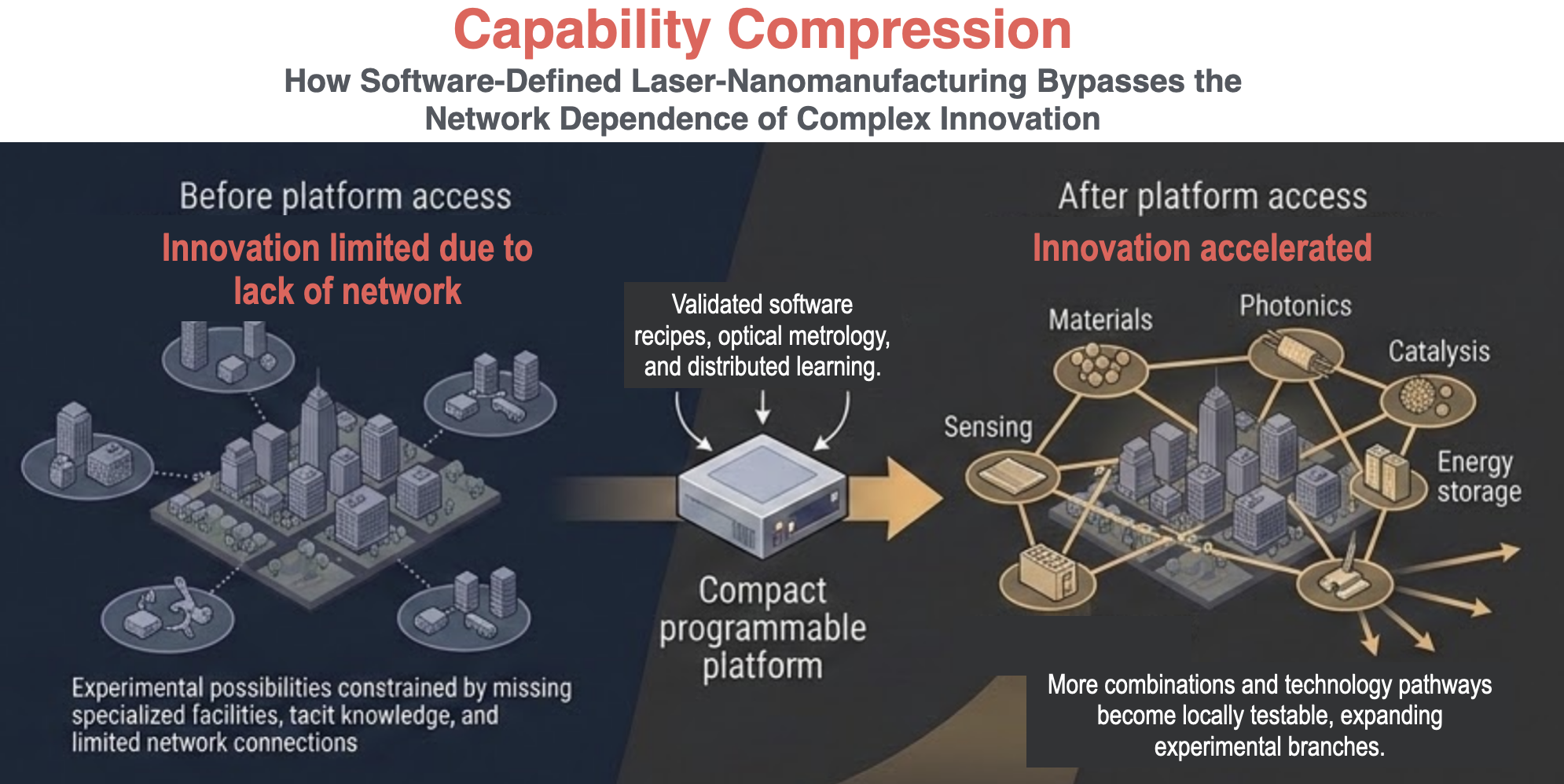
Conceptual before-and-after diagram showing how a compact programmable laser-nanomanufacturing platform could expand locally testable experiments across materials, photonics, catalysis, sensing, and energy storage.
CEC 2026, Istanbul — capability compression and software-defined manufacturing
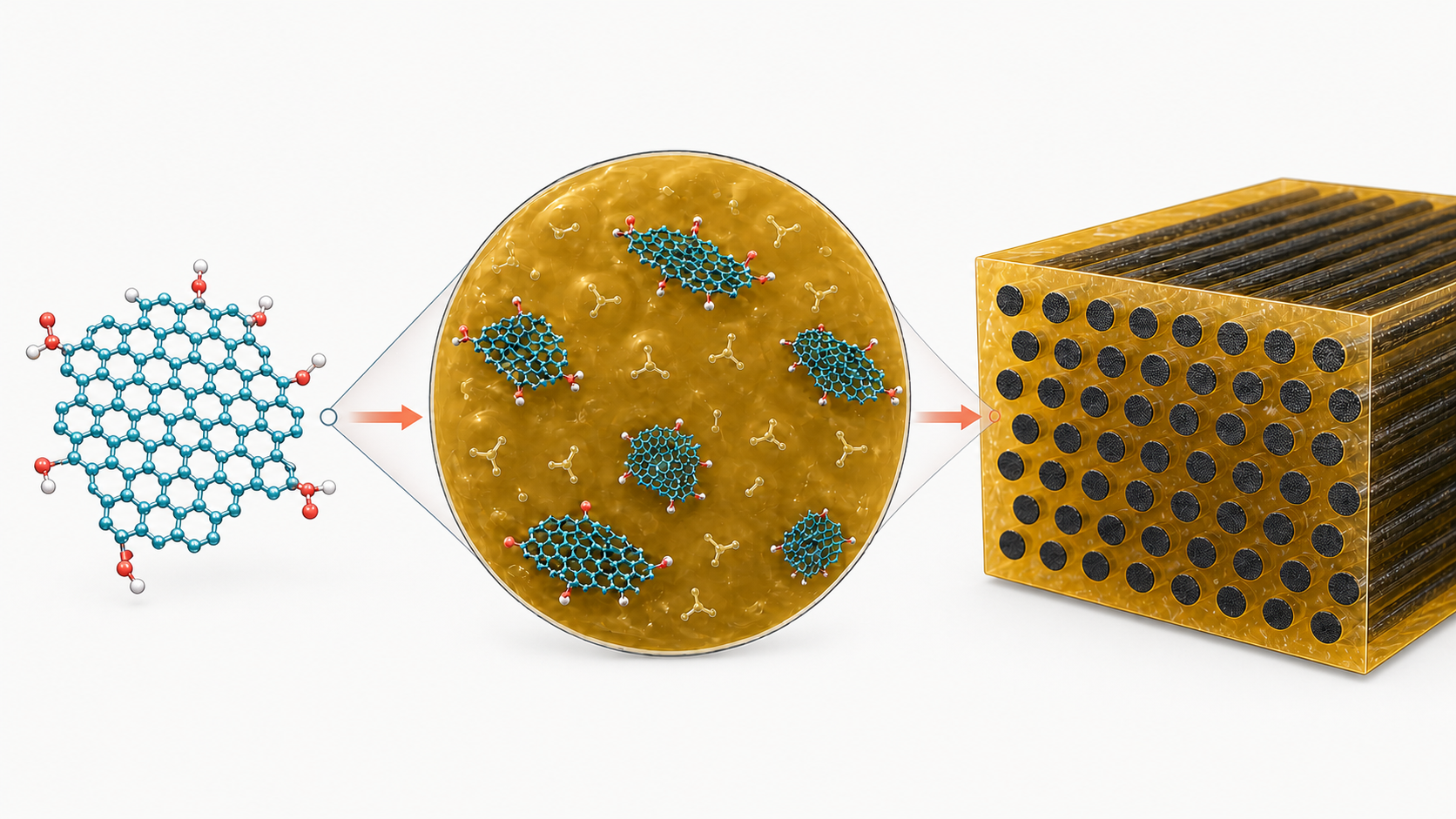
Multiscale illustration of teal graphene quantum dots dispersed in amber epoxy and embedded with carbon fibers.
From quantum dots to carbon-fiber composites: what should we test next?
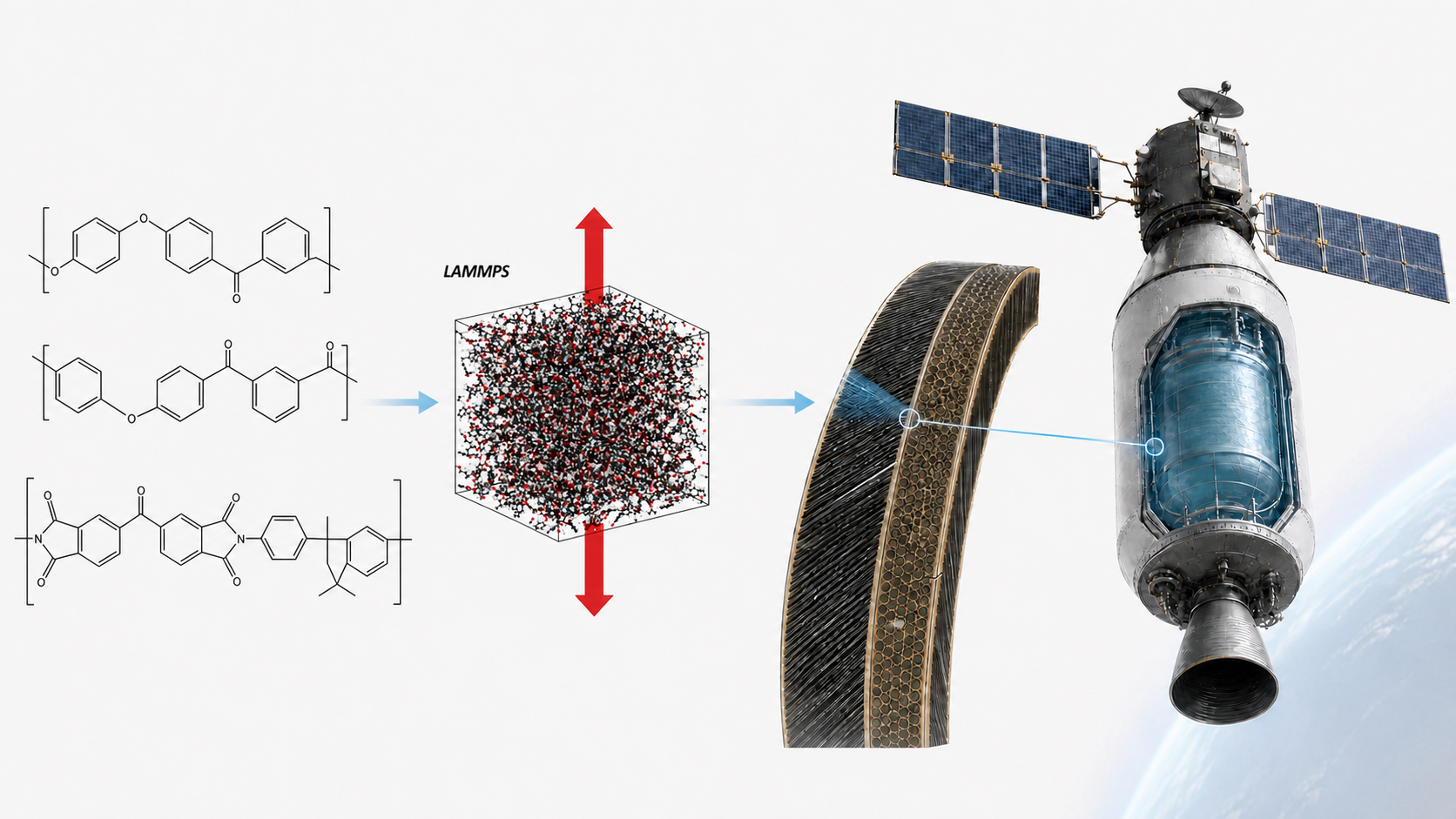
Polymer backbones feed an atomistic molecular-dynamics cell, a carbon-fiber composite laminate, and a spacecraft cryogenic tank
Screening polymer matrices for cryogenic applications — Materials & Design

Foundations: a decade of additive-manufacturing and molecular-dynamics research on polymers, ceramics, and composites — and, since 2022, quantum-dot nanocomposites under an NSF CAREER award — underpins how we design, instrument, and interpret light-driven synthesis experiments.

Beyond the lab: engineering-education research in virtual reality, photography, and science writing — see Education and Gallery.

Ozgur Keles, Ph.D. — Associate Professor, Mechanical Engineering & Engineering Science, UNC Charlotte · [email protected] · Publications